

Route the business matter before choosing an attorney
Choosing counsel starts with identifying the kind of legal problem your business is facing. A practical first question is whether the matter is transactional—such as structuring or documenting a business—or litigation-related because a dispute has arisen. That distinction gives you a clearer starting point for searching, preparing, and comparing lawyers.
Use these routing questions:
- Are you building, changing, or documenting something? The matter is more likely transactional. Examples include forming a business, reviewing an agreement, or addressing an operational question before a dispute develops.
- Has another party asserted a claim or begun a dispute? The matter is more likely litigation-related. A lawsuit, demand, or contested business relationship may require a different type of experience and response.
- Does the situation contain both elements? Describe both parts instead of forcing the issue into one label. A contract problem, for example, may involve an agreement that needs review and a dispute that has already begun.
- What decision must you make next? You may need to decide whether to sign, respond, negotiate, form an entity, change an operating arrangement, or address a claim.
Your first objective is not to reach a legal conclusion. Your objective is to describe the event, identify what you need from counsel, and give potential lawyers enough context to explain whether their experience fits. Write a short account that separates what happened from what you think it means. Include the people or organizations involved, the documents connected to the issue, and any date or response information shown on a notice.
Begin with the matter category, then compare the people who handle that category. A clear description will make the later steps—searching profiles, preparing questions, and discussing fees—more useful.
Understand what a business attorney generally handles
A business lawyer generally helps companies address legal obligations, structure transactions, and understand how law affects operational decisions. Business-law work can involve advice about a transaction or document, but it can also involve connecting legal requirements with the way your company operates.
That broad description matters because the right search terms depend on your actual problem. A lawyer who handles business matters generally may not handle every type of transaction, industry issue, or dispute. Use the business category as a starting point, not as the final description of the legal work you need.
Describe three things before you contact counsel:
- The business setting: Explain what your company does, who it serves, and which part of its operation is involved.
- The legal event: Identify the planned transaction, document, decision, disagreement, notice, or other event that prompted the search.
- The decision ahead: State what you need to decide, prepare, review, negotiate, or respond to next.
This structure keeps a broad label from replacing the actual question. For example, “I need business help” gives a lawyer little basis for assessing fit. “I need advice about a proposed agreement with a supplier” identifies a legal task and the business relationship involved.
Small-business legal services may include formation, contracts, hiring practices, taxes, and compliance. The appropriate subject depends on the facts, the stage of your business, and the question you need answered.
You can begin by sorting your concern into a short list:
- Formation: You are creating a business and need to discuss the structure and documents involved.
- Contracts: You need an agreement drafted, reviewed, negotiated, or addressed after a disagreement.
- Hiring practices: Your question involves bringing workers into the business or managing an employment-related issue.
- Taxes or compliance: You need help understanding a legal obligation connected to how the business operates.
- Disputes: Another party has made a claim, sent a demand, or otherwise created a contested issue.
These categories describe possible areas of work; they do not decide which service you require. State your business activity, the event that prompted the search, and the decision you need to make. If more than one category applies, identify the immediate issue first and then list the connected concerns. That gives counsel a practical starting point without turning a general guide into an individualized legal conclusion.
Decide whether the matter is transactional or litigation-related
A business matter is generally transactional when the legal work is meant to structure, document, or support a company’s operations; a business matter is litigation-related when a dispute has arisen and requires a response. Transactional work can precede conflict, while litigation work addresses an asserted or developing dispute.
Ask yourself four questions before you search:
- What changed or prompted the need for help?
- Is another party demanding action, money, performance, or a response?
- Do you need a document, structure, or operating decision addressed before an expected transaction?
- Has a dispute already affected a contract, relationship, or business decision?
Your answers should become a short matter description rather than a conclusion about who is right. You might describe a disagreement about an existing contract, a planned business formation, or a question about hiring practices. That wording helps you look for relevant experience without assuming that a general business category answers the legal question.
The transactional-versus-litigation distinction is a routing tool, not a final label for your legal needs. A planned agreement may later produce a dispute, and a dispute may require review of the transaction or documents that preceded it. Describe the current stage plainly.
Use a two-part description if necessary:
- Primary route: State whether you need help creating, reviewing, or changing a business arrangement, or responding to an asserted dispute.
- Connected issue: Add the contract, ownership question, employment concern, compliance matter, or other subject tied to that route.
For a transactional matter, ask for experience with the specific document, structure, or business decision involved. For a litigation-related matter, identify the claim, demand, lawsuit, or threatened dispute at the beginning of your contact message. If you cannot tell which route fits, describe the event and ask counsel how the matter should be handled rather than choosing a label with confidence you do not have.
Map the issue to possible business-law services
Mapping the issue to a possible service means turning the business event into a specific question for counsel. A business lawyer may work on formation, contracts, hiring practices, taxes, compliance, transactions, or disputes, depending on the matter.
Create a one-page issue map with these fields:
- Business context: Identify what the company does and the product or service involved.
- Triggering event: Record what happened, such as a planned formation, proposed agreement, workplace decision, compliance concern, or dispute.
- Legal task: State whether you need a document reviewed, a transaction structured, an operating question addressed, or a dispute assessed.
- People and organizations involved: List owners, investors, workers, customers, suppliers, or other parties connected to the issue.
- Decision ahead: Explain what you need to decide or accomplish next.
- Documents available: List the agreements, notices, formation records, financial materials, or other files related to the question.
The map keeps your search focused. If you are forming a business, look for experience with formation and the related operational questions. If you are reviewing an agreement, look for relevant contract experience. If another party has made a claim, describe the dispute clearly and search for counsel who handles that kind of contested matter.
A focused issue map also helps you separate the immediate legal task from background concerns. Start with the question that requires a decision now, then list related questions underneath it. For example, a proposed business arrangement may raise formation, contract, ownership, and compliance topics, but your first contact can identify which decision is closest in time.
Do not broaden the description simply because a profile uses a long list of practice areas. Use the narrowest accurate description of your immediate problem, then ask whether the lawyer handles related issues when you speak with them. If the issue changes during the conversation, update the description rather than treating the original category as fixed.
Your issue map is also a comparison tool. Give each lawyer the same short description and record whether the lawyer identifies the relevant legal task, asks for useful context, and explains what information is needed before the next discussion. That record helps you compare fit without relying on a general practice label alone.
Compare attorneys by matter and industry fit
Comparing lawyers by relevant matter and industry experience gives you a more useful starting point than choosing from a general business-law label. Guidance for evaluating business counsel identifies experience with the legal area most relevant to your company and, where possible, the company’s industry as a consideration.
Use the same questions for each potential lawyer:
- Has the lawyer handled the type of matter you described?
- Does the lawyer work with businesses in an industry similar to yours?
- Which part of the matter would the lawyer handle personally?
- Can the lawyer explain the first decision your matter requires without promising a result?
- Does the stated practice focus match the issue map you prepared?
Matter fit and industry fit answer different questions. Matter fit asks whether the lawyer works on the legal task. Industry fit asks whether the lawyer understands the setting in which that task arises. You may need to discuss both, especially when the business operates under practical conditions that shape the documents, relationships, or decisions involved.
A profile can help you create a shortlist, but your shortlist still needs a direct conversation. Ask the same core questions of each lawyer so that your comparison reflects similar information rather than different marketing language.
A useful comparison record separates facts from impressions. For each lawyer, note the relevant matter experience described, the industry experience described, the questions the lawyer asks about your situation, and the subjects that remain unanswered. Do not treat a broad list of practice areas as proof that every listed area matches your matter.
Ask for concrete descriptions rather than a general assurance of experience. You can ask which part of the work the lawyer has handled, whether another attorney will perform the day-to-day work, and what information would be needed to assess the matter. You do not need to decide the legal merits during this screening stage.
If you cannot describe the matter clearly enough to compare experience, return to the issue map before making more contacts. A narrower description usually gives you a more meaningful conversation than adding every possible business-law category to your search. Also consider the jurisdiction connected to the matter. Applicable legal needs can vary by state and situation, so ask whether the lawyer’s experience is relevant to the state and matter involved and whether additional location or governing-document information is needed. An answer that depends on more facts is a prompt to clarify the scope of the comparison, not a conclusion about suitability. Record that response with the matter and industry-fit notes. This keeps your shortlist tied to the setting of the work rather than to a broad practice label.
Confirm who will handle the matter day to day
Confirming day-to-day responsibility tells you who will actually manage the work after the initial contact. Guidance for evaluating business counsel recommends asking which lawyer will handle the matter and how senior lawyers will participate in strategic decisions.
Ask directly:
- Who will handle the matter day to day?
- Who will make or advise on strategic decisions?
- Which lawyer will attend meetings or respond to substantive questions?
- Will another lawyer or associate perform much of the work?
- How will responsibility change if the matter becomes more complicated?
The person who first discusses your matter may not be the person who performs the ongoing work. That does not automatically make the arrangement unsuitable, but it gives you a fact to compare. Record the names, roles, and expected involvement in your consultation notes. Then compare the actual working arrangement with the level of experience your matter calls for.
Ask for the working arrangement in plain terms before you engage counsel. If the answer is not settled, record what is known and what still needs to be clarified.
Set communication and fee expectations before engagement
Communication and fee expectations should be discussed before significant work begins. Guidance for evaluating business counsel identifies communication practices, expected response times, fee explanations, estimates before significant work, and updates as costs develop as useful comparison points.
Ask each lawyer:
- What communication methods do you use for this type of matter?
- What response time should you expect for routine questions and time-sensitive developments?
- How does the lawyer charge for the work?
- Can the lawyer provide an estimate before significant work begins?
- How will cost changes or additional work be communicated?
- What work is included in the initial scope, and what work would require a separate discussion?
Write down the answers in the same format for each consultation. A response-time expectation is not a promise about a legal result, and an estimate is not necessarily a fixed total. The point is to understand how the working relationship and costs will be discussed as the matter develops.
Fee rules can vary by jurisdiction and matter. DC Bar guidance states that a lawyer may require advance payment but must return any unearned portion; that guidance is specific to the District of Columbia and should not be treated as a nationwide fee rule. Ask counsel how the proposed arrangement applies to your matter and jurisdiction.
Fee questions should remain separate from the question of legal fit. A lower quoted amount does not by itself show that a lawyer handles your type of matter, and a higher estimate does not by itself establish a better match. Compare the scope of work, who will perform it, how communication will work, and how costs will be explained.
Before agreeing to significant work, identify what you understand the lawyer will do, what information you must provide, how changes in scope will be addressed, and which cost questions remain open. Keep the written engagement terms with your matter records and ask about any provision you do not understand. To compare fee information fairly, ask each lawyer to describe the same initial scope of work. An estimate for reviewing a document alone may not cover the same work as one that includes revisions, negotiation, or responding to a dispute. Ask what task the estimate assumes, which facts or documents it depends on, and what could change the scope. If the lawyer cannot estimate at the outset, ask how work will be tracked and when costs will be discussed again. These questions do not predict the total cost; they clarify what each fee explanation covers. Keep separate notes for scope, fee method, estimate, and update process so a price difference is not mistaken for a difference in legal fit. Note whether each estimate concerns an initial task or a broader scope, and ask what would require a new discussion.
Prepare the information a consultation may require
Preparing a focused consultation packet helps you explain the business and the question without searching for basic information during the meeting. Consultation guidance identifies requested intake forms or questionnaires, a business plan, relevant contracts, financial or formation documents, ownership information, prior business experience, and a hiring-and-pay plan as potentially useful materials.
Gather what applies to your situation:
- Completed intake forms or questionnaires that the lawyer requested.
- A business plan describing the company’s products or services, personnel, equipment, and facilities.
- Existing contracts connected to the issue.
- Financial statements or formation documents relevant to the question.
- The names and roles of owners and investors.
- A short description of your prior business experience and the experience of co-owners or investors.
- A plan for hiring workers and paying them.
- Notices, demands, or correspondence connected to a dispute.
Do not send every business document automatically. Start with the materials connected to the issue map and follow the lawyer’s instructions about what to provide. Organize files by subject and add a short note explaining why each document matters. That structure helps you identify missing facts and keeps the consultation focused.
A business plan can help a lawyer understand your operations and assess issues such as entity structure, zoning, licenses, insurance, and taxation. Information about owners and investors may affect the structure and agreements your business needs, including arrangements involving buyouts, profit sharing, decision-making authority, and other rights and obligations.
Prepare questions alongside the documents. Ask what facts could change the lawyer’s assessment, what additional records are needed, which part of the matter requires attention first, and who will handle the work. Ask whether the lawyer needs the full document or only particular sections for the initial discussion.
Give a direct answer when you know one, and mark an item as unknown rather than guessing. A short chronology can also help: list the relevant event, the people involved, the document connected to it, and what happened afterward. Keep the chronology factual and separate from conclusions about responsibility or legal rights.
Use profiles, reviews, and consultations to test fit
Profiles, client reviews, and consultations provide separate screening signals. At Lawyers.co, we let clients review profiles, read client reviews, and schedule consultations with lawyers. Use each source for a different purpose:
- Profiles: Compare the lawyer’s stated practice areas, matter experience, and business or industry focus with your issue map.
- Client reviews: Look for recurring descriptions of communication, organization, and the client experience, then turn those observations into questions rather than conclusions.
- Consultations: Ask about the matter, day-to-day responsibility, communication, fees, and the information needed to proceed.
A profile or review can help you decide what to ask, but neither replaces a matter-specific discussion. Reviews describe other clients’ experiences, not the legal merits or likely result of your situation. A profile also cannot by itself determine whether a lawyer is suitable for the facts, jurisdiction, and stage of your matter.
Create a comparison record with four fields: relevant experience, expected lawyer involvement, communication and fee expectations, and questions raised by the profile or reviews. Complete the same record for each option. Base your next contact on the questions that remain and the fit you can evaluate, not on a single rating or phrase.
A consultation turns a general listing into a matter-specific conversation. Use that opportunity to explain the triggering event, identify the legal task, ask who will handle the work, and discuss communication and fees.
Keep the conversation bounded by the facts you have prepared. If the lawyer needs more information, record the requested documents and the question that remains open. If the lawyer does not handle the matter, ask whether the matter category should be described differently before you search again.
A useful consultation record includes:
- The lawyer’s description of the issue and the work requested.
- The person expected to handle the matter day to day.
- Questions about scope, communication, and costs.
- Documents or facts the lawyer asks you to provide.
- Any question that requires a later answer.
At Lawyers.co, we provide the pathway to review profiles, read client reviews, and schedule consultations. Use those features to organize your next conversation; let the consultation address the specific facts and suitability questions that a listing cannot resolve.
Treat lawsuits and demand letters as potentially urgent
A lawsuit, demand letter, or known circumstance that may lead to a third-party claim can require prompt attention. Commercial-litigation guidance states that immediate steps may be needed to mitigate a company’s liability risk in those situations.
If your company has been sued, received a demand letter, or faces a potential third-party claim, ask qualified counsel promptly whether immediate risk-mitigation steps are needed. Tell counsel when the document or event occurred, what response date appears on any notice, who sent it, and what action has already been taken.
Do not bury an urgent dispute inside a general business-law search. Put the lawsuit, demand, or potential claim at the beginning of your matter description and preserve the relevant notice and related records. The supported next action is to contact qualified counsel about whether immediate steps are needed; it is not to decide the merits of the dispute from a general guide.
If a notice identifies a response date, include that date in your first contact. Do not assume that a general consultation timeline addresses a deadline connected to your matter.
Start contact through a matter-specific intake pathway
The next step for a business-law matter is to submit a clear description that identifies the matter route, the legal task, the people involved, and the decision ahead. Bring the issue map, relevant documents, comparison questions, and any deadline or demand information into that first contact.
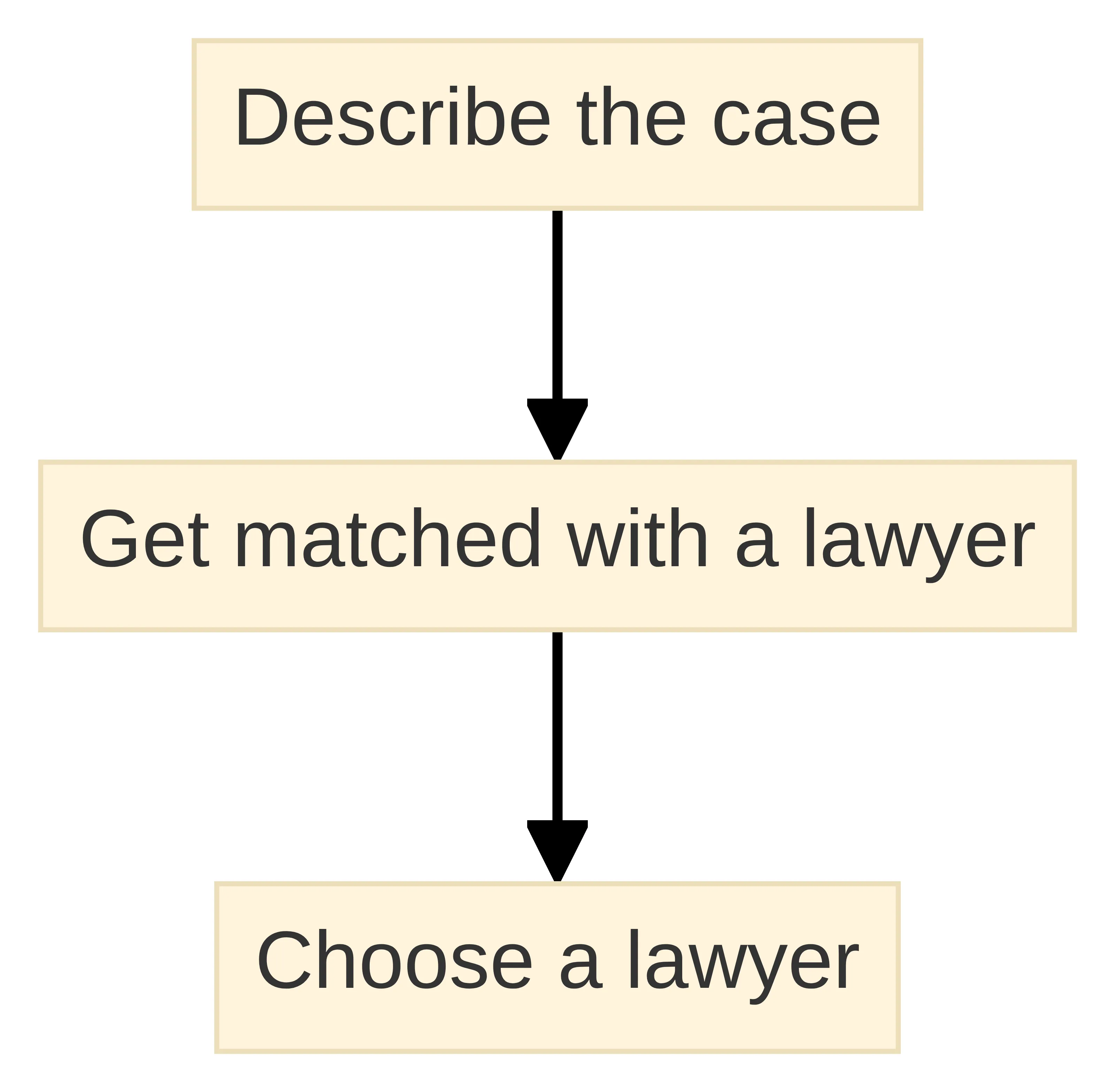
At Lawyers.co, we review your legal matter through an intake team to understand your specific needs. Our process begins with describing your case and continues through choosing a lawyer. Before you make contact, prepare a concise account that answers these questions:
- What does the business do?
- What happened or what transaction is planned?
- Is the matter primarily transactional, litigation-related, or a combination?
- What decision or response is needed next?
- Which documents, owners, investors, workers, or other parties are involved?
- Is a demand, lawsuit, or response date part of the matter?
Applicable legal needs can vary by state and situation, so use the initial contact to present the facts accurately and ask the questions that remain open.
What should you confirm before choosing a business attorney?
What services can a business attorney provide?
A business attorney can assist with various legal matters, including business formation, contract drafting and review, compliance with hiring practices, tax issues, and resolving disputes.
How can I evaluate potential business attorneys?
When evaluating business attorneys, consider their relevant experience in your specific legal area, their familiarity with your industry, communication practices, and fee transparency.
What should I prepare before consulting a business attorney?
Before a consultation, gather any requested intake forms, a business plan, relevant contracts, financial documents, and information about owners and investors.
What steps should I take if I receive a demand letter or lawsuit?
If you receive a demand letter or lawsuit, contact a qualified attorney promptly to discuss immediate risk-mitigation steps.
What information should I include when describing my legal matter to an attorney?
Include details about your business, the legal issue at hand, any relevant documents, and the decision or response you need to make.
Sources
- Business Attorney: What They Do for Companies — scarincihollenbeck.com
- Commercial Litigation Attorney | Federal Lawyer — federal-lawyer.com
- Things to Keep in Mind About Business Lawyers — www.sskrplaw.com, 2026-01-17
- What Does a Small Business Lawyer Do? - LegalShield — www.legalshield.com
- What to Ask a Business Lawyer During a Consultation: A 2026 Guide for Entrepreneurs — fornarolegal.com
- What to Bring to Your First Meeting with Your Business Lawyer — carrtaxlaw.com, 2025-01-01
- Lawyers Directory - Find Lawyers - Lawyers.co