

Start with the problem, not a lawyer’s name
Attorney specialty should guide your search before you spend time evaluating an individual name. Start by describing what happened, what kind of help you think you need, and where the matter is connected. That sequence keeps the search focused without requiring you to reach a legal conclusion before speaking with counsel.
Your first task is to create a short issue description in ordinary language. Include the event, the people or organizations involved, the harm or dispute, and any location connected to it. For example, an accident description might identify a collision, a fall on property, an injury at work, or a dispute with an insurer. A business or employment matter needs a different starting description. The point is not to label the matter with certainty. The point is to give your search enough structure to produce relevant specialties.
A name-first search can make you compare attorneys before you know whether their work fits the problem. A specialty-first search reverses that order. It gives you a way to build a short list, check the applicable jurisdiction, and prepare questions that expose differences between possible choices.
Use the following sequence:
- Describe the event or dispute without legal conclusions.
- Identify the harm, demand, or decision you need help with.
- Mark every state, county, or city connected to the matter.
- Turn those facts into two or three practice-area search terms.
- Check authorization and status through an appropriate official record.
- Compare relevant experience, profiles, reviews, and consultation arrangements.
This approach works for personal injury searches in Austin, Abilene, Brownsville, Beaumont, the Texas Hill Country, or elsewhere in the United States, as well as for other legal problems. Your location and facts determine how narrow the search should become.
Turn the facts into practice-area language
Practice-area language gives your factual description a usable search shape. Begin with the event, then add the legal relationship or dispute that makes the event significant. Avoid trying to prove your case in the search box. A concise factual description leaves room to refine the search term if it does not fit.
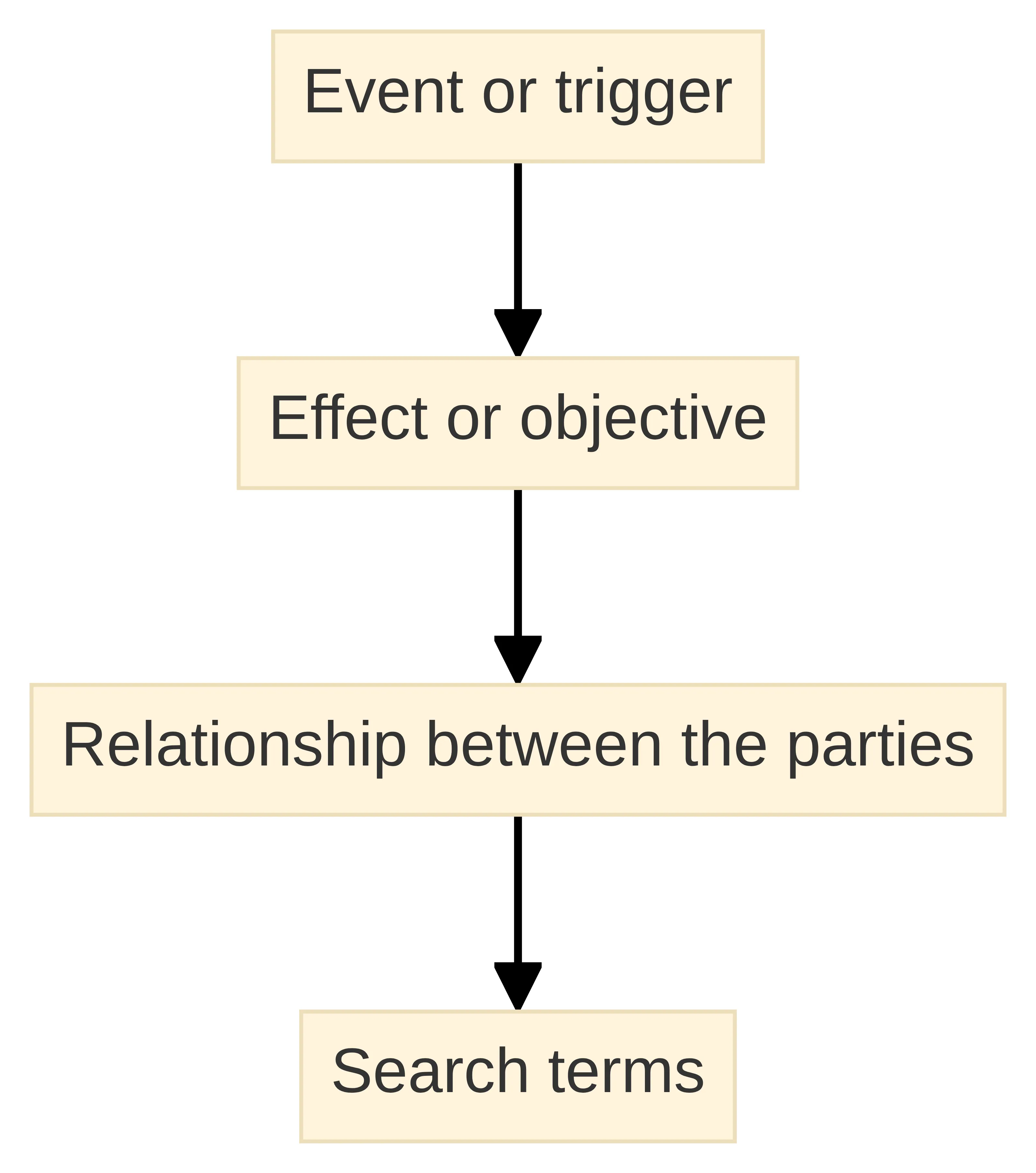
Break your matter into four layers:
- Event or trigger. Identify the collision, fall, workplace incident, contract dispute, arrest, family change, immigration concern, or other event that prompted you to look for help.
- Effect or objective. State whether you are dealing with an injury, property loss, an accusation, a threatened lawsuit, a separation, a business disagreement, or another practical problem.
- Relationship between the parties. Note whether the other side is a driver, property owner, employer, insurer, former partner, business, government agency, or another person or organization.
- Search terms. Combine the event and objective into a phrase such as personal injury after a collision, premises liability after a fall, employment dispute, family law, criminal defense, or immigration matter.
These terms are starting points rather than diagnoses. An accident involving bodily harm may lead you to search for personal injury attorneys; a fall may call for a more specific premises-related term; an insurance dispute may require you to ask whether the attorney handles both the underlying injury and the coverage issue. Keep both possibilities in your notes when the facts touch more than one area.
Write down the words you would use to explain the situation to a friend who needed to understand the basic problem. Search with the facts first and use the consultation to test whether the initial specialty is broad enough, too narrow, or beside the point.
Add the location that controls the search
Record every relevant place instead of assuming that the city where you live answers the jurisdiction question. Useful locations may include where the event happened, where the other party operates, where a contract was made or performed, and where a court or agency has contacted you.
State bar organizations can be voluntary, government-sanctioned, or both. New Jersey’s official search includes admission date, practice status, and the county and municipality of an attorney’s business office. Pennsylvania provides a public lookup for information about individual attorneys. Those differences make the state connected to your matter more than a convenience filter.
Use location in three ways:
- Add the state to the specialty phrase when you search online.
- Add a city or county when the attorney’s office location matters to your consultation.
- Identify the relevant state authority before relying on a directory profile.
A Texas search may begin with personal injury attorney in Austin, car accident attorney in Beaumont, or injury lawyer near the Texas Hill Country, depending on the facts you can describe. A search tied to Abilene, Brownsville, or another community may produce a different pool from a statewide search. Those phrases organize the search; they do not decide which state’s law applies or whether an attorney can handle the matter.
If several states appear in your notes, keep them all visible. Ask prospective attorneys which location they consider relevant and whether they handle matters involving more than one state. Do not discard a location simply because it is not your home address.
Build a short search by specialty and location
A short search works better than an unrestricted list of every attorney who uses a broad practice label. Use the specialty and location together, then apply the same screening questions to each result so that your comparison remains meaningful.
Create a search worksheet with these fields:
- Matter phrase: your one-sentence factual description.
- Possible specialty: the practice area suggested by those facts.
- Location: each state, county, or city connected to the matter.
- Candidate name: the attorney or firm shown in the result.
- Relevant work: the type of matter described in the profile or conversation.
- Status source: the official record you plan to check.
- Questions: the points you need answered before choosing.
Run a first search using the broadest reasonable specialty. Run a second search using a narrower term if the results are too general. For an injury matter, you might compare personal injury with a more specific accident or premises-related phrase. For a dispute involving a business, employment, family, criminal, or immigration issue, keep the search tied to the relationship and event rather than relying on a generic attorney label.
Limit the working list by relevance, not by a promise that a smaller list is better. Remove a result when the profile does not identify work resembling your matter, the location appears unrelated, or the available information leaves your basic question unanswered. Keep a note explaining why you removed each result so that you do not repeat the same search without learning from it.
A directory, search engine, bar record, or matching service can supply different pieces of the process. Treat each as a starting point with a defined job. Search tools help you assemble names; official records help you examine status; profiles and consultations help you test fit. No single listing should replace the full sequence.
Use official records to check attorney status
An official state or district record gives you a separate place to check the attorney’s public status. Use the authority connected to the jurisdiction rather than treating a private profile as the only record. The available fields depend on the jurisdiction.
Examples from official attorney records and directories show why a state-aware check matters:
- New Jersey: The official attorney-search tool can show admission date, status to practice, and the county and municipality of the business office. The search can use an exact last name and at least the first initial, with city or county filtering available.
- Pennsylvania: The Disciplinary Board provides a public lookup for individual attorneys admitted to practice in the Commonwealth. You can search by last name, first name, ID number, city, or county.
- District of Columbia: The D.C. Bar member directory is intended to provide information about a specific attorney who is a member of the D.C. Bar.
- New York: For New York, use the New York State Unified Court System attorney search to check a lawyer’s license or good standing. It also explains that New York does not use attorney bar numbers in the same way described for most states in that material.
Use the official record to compare the exact name, jurisdiction, status, and office information with the profile you found. Save the date of your check in your worksheet because directory and government records can change. If your matter connects to more than one state, identify the relevant record for each state rather than treating one lookup as nationwide confirmation.
A status lookup answers a narrow question. It does not evaluate specialty fit, communication, strategy, fees, or likely results. Keep those questions for your comparison and consultation stages.
Resolve identity before relying on a record
Attorney identity must match across the profile, contact information, and official record before you rely on the result. A similar name is not enough. Compare the full name, office location, jurisdiction, and any attorney ID or registration detail shown by the applicable authority.
New Jersey’s official search warns that more than one attorney may share the same name, including within the same county or city. The tool instructs you to use the attorney ID to ensure that the record belongs to the correct person. Apply that identity check whenever the jurisdiction supplies an identifying number or other distinguishing field.
Use this short identity sequence:
- Copy the attorney’s full name exactly as displayed in the profile.
- Search the relevant official record using the available name fields.
- Compare the office city, county, state, and practice information.
- Match the attorney ID, registration number, or other identifier when available.
- Record any difference before you contact the attorney.
Do not resolve a mismatch by guessing that two names refer to the same attorney. Ask the office which public record belongs to the person you are considering, or remove the candidate until the identity is clear. If the official tool does not provide the field you expected, note that limitation and use the information it does provide without treating an incomplete match as a complete one.
Compare specialty fit and similar-matter experience
Specialty fit is strongest when an attorney can explain experience with matters that resemble your facts, not merely list a broad practice area. Compare the type of event, the opposing party, the location, and the stage of the problem. Two attorneys may use the same specialty label while handling very different kinds of cases.
The Florida Bar consumer guidance says that before hiring a lawyer, you may ask about education, training, experience with similar cases, and special training or knowledge. The guidance also says that the information should be provided in writing if you request it. Use that principle as a practical screening standard, while recognizing that the cited guidance is from Florida and does not establish identical wording or procedures in every state.
Ask each candidate:
- What kinds of matters similar to mine do you handle?
- Which facts make my matter fit within that work?
- What information would you need before deciding whether the matter is within your practice?
- Who would handle the work after the initial conversation?
- What experience or training is relevant to the issue I described?
Compare the answers for specificity. A useful answer connects the attorney’s experience to the facts you supplied and identifies what remains uncertain. A broad statement that an attorney handles many practice areas gives you less information than a clear explanation of the kinds of matters the office routinely considers.
Do not treat a stated specialty as a conclusion that the attorney is suitable. Treat it as a reason to ask better questions. Keep the answer beside the candidate’s official-status check, location, and consultation notes so that the final choice rests on several distinct signals.
Treat profiles, reviews, and matches as screening signals
Profiles, reviews, and matches can help you decide which questions to ask, but they do not settle whether an attorney fits your matter. Read each item for specific information rather than for a general impression.
Use an attorney profile to locate:
- The practice areas the attorney identifies.
- The jurisdictions or locations connected to the practice.
- Descriptions of similar matters or client problems.
- Education, training, or experience information you can ask about directly.
- The preferred way to request a consultation.
Use reviews to identify recurring topics that deserve questions, such as communication, clarity, responsiveness, or the process of working with the office. Do not treat a positive review as proof of a particular result. A negative review may also lack the context needed to explain what happened. Your task is to identify a question, not to decide the entire matter from a short account.
Use a match as a proposed starting point. Compare the proposed attorney with your specialty, location, status, and experience notes before you make contact. Ask how the match relates to the facts you supplied and whether the attorney or office has reviewed enough information to decide that the matter belongs within its work. Avoid sharing unnecessary sensitive details until you understand the purpose of the first contact and the information requested.
A practical scoring sheet can use five separate columns: specialty relevance, location relevance, official-record match, similar-matter questions, and consultation fit. Leave the cells blank when you lack information. Blank information is a prompt for a question, not a reason to fill the gap with an assumption. This keeps profiles, reviews, and matches in their proper role: screening signals that help you prepare for a direct conversation.
Prepare a concise description for the consultation
A concise matter description gives the attorney a clearer starting point for the consultation. Prepare the facts in chronological order and separate what you personally know from what you were told. Do not try to write a legal brief or include every document before you know what the office needs.
Create a one-page summary with these parts:
- Opening sentence: State the event, dispute, or decision that led you to seek help.
- Dates and locations: List the key date or date range and every location that may matter.
- People and organizations: Name the parties, insurers, employers, property owners, agencies, or other entities involved.
- Known effects: Describe injuries, property damage, financial demands, notices, accusations, or other consequences in factual terms.
- Documents and communications: List contracts, incident reports, letters, emails, photographs, medical records, court papers, or deadlines you know about.
- Your question: State what you want the attorney to help you understand or decide.
Keep the first version short enough to explain aloud in two or three minutes. If the attorney needs more detail, add it after the office identifies the relevant issue. Mark uncertain dates and disputed facts as uncertain instead of presenting them as settled.
Bring a separate list of questions. Include the specialty-fit questions, status questions, fee questions, and handoff questions that apply to your situation. Organize documents by date and keep copies for yourself. Share only what is needed for the initial purpose until you understand how the office wants information delivered.
A factual summary also helps you compare consultations. After each conversation, record what the attorney understood, what follow-up information was requested, who would handle the matter, and which questions remain open. That record makes the next decision easier without turning your notes into a conclusion about the legal merits.
Ask questions that reveal fit before choosing
Consultation questions should reveal how the attorney’s practice fits your matter, how the work would be handled, and what you need to decide before moving forward. Ask the same core questions of each candidate so that the answers are easier to compare.
Start with matter fit:
- Does this matter fall within your practice area?
- Which facts make it similar to work you handle?
- What additional facts would change that assessment?
- Which state, county, or court connection should guide the next search or step?
Ask about experience and staffing. The Florida Bar guidance says you may ask about an attorney’s education, training, experience with similar cases, and special training or knowledge, and request that information in writing. Ask who would communicate with you, who would perform the work, and whether another attorney or firm might become involved.
Ask about the agreement and fee structure in plain language. If the proposed arrangement is contingent, the Florida Bar guidance says that before signing the contract, the lawyer must advise you whether the lawyer will handle the case alone or whether other lawyers will help, including relevant fee-sharing arrangements when a referral is involved. Ask which lawyers would be covered by the written agreement and what costs or responsibilities it describes.
Ask what happens if the staffing plan changes. The same Florida guidance says that if a lawyer later refers the case or associates with other lawyers, you should ask whether a new contract is required and whether it includes every lawyer involved. Treat that as Florida-specific guidance and ask what rules and written terms apply to your matter’s jurisdiction.
Finish by asking what information the office needs from you, what decision remains yours, and what the next communication will cover. Write down the answer instead of relying on memory.
Use the consultation to confirm the search decision
A consultation should help you test the search assumptions you made before contacting the office. Bring your matter summary, your location list, your official-record notes, and your questions. The conversation is an opportunity to see whether the attorney understands the facts and can explain the scope of the proposed work in terms you can follow.
Use the conversation to revisit four points:
- Specialty: Ask whether the initial practice-area term describes the problem accurately enough for the office to consider it.
- Location: Ask which state, county, city, court, or agency connection affects the work the office is discussing.
- Experience: Ask how the attorney’s work with similar matters relates to the facts you supplied.
- Scope: Ask what the office would handle, what it would not handle, and who would perform the work.
Pay attention to the quality of the explanation, not only to the conclusion. A clear answer can identify missing facts, competing specialty terms, or a need for a different type of attorney. A vague answer leaves you with a reason to ask for clarification or continue your search.
After the conversation, update your worksheet. Record the attorney’s stated practice fit, the jurisdiction discussed, the proposed staffing, the documents requested, the fee questions still open, and the next decision you need to make. Compare those notes with the same fields for other candidates. Choose whether to continue, contact another candidate, or rebuild the specialty search based on what you learned.
Do not treat a consultation as a promise about the result of the matter. Use it to decide whether the attorney’s stated scope and experience match the problem you described.
Use Lawyers.co as an optional search and intake starting point
Lawyers.co can be one starting point for organizing an attorney search after you have described the matter and identified a likely specialty. We let you review attorney profiles, read client reviews, and schedule consultations with lawyers. Use those functions to create questions and a focused shortlist rather than to skip the location and status checks.
Our stated process has three parts: you describe your case, get matched with a lawyer, and choose a lawyer. Our expert intake team reviews legal cases to understand specific needs. Those are descriptions of our process, not a guarantee that any match will be suitable for your matter or produce a particular result.
Prepare before using an intake or matching request:
- Write the one-sentence matter description.
- Add the likely practice area and every relevant location.
- Mark the key date, notice, filing, or contact you know about.
- State what you want to discuss with an attorney.
- Keep sensitive detail limited to what the initial request requires.
Use the response as one input in the same worksheet you would use for another search source. Compare the proposed specialty, location, profile information, client reviews, official-record result, and consultation answers. Ask the same fit and staffing questions before choosing an attorney.
Lawyers.co is therefore an optional route into the search, not the search decision itself. You remain responsible for comparing the information you receive and deciding what question to take into a consultation. If the proposed match does not address the specialty or location in your notes, return to the search terms and revise them instead of assuming that the first match resolves the issue.
Know what specialty-first searching cannot decide
Specialty-first searching narrows your options, but it cannot decide every issue that matters to your legal problem. A practice-area label does not establish that an attorney has reviewed your facts, accepts your matter, handles the relevant jurisdiction, or agrees with your description of the issue.
Keep these boundaries visible:
- A search term does not determine whether you have a claim, defense, or other legal position.
- A profile does not establish that the attorney is available, that the office will accept the matter, or that the stated experience matches every fact.
- A review does not predict your communication experience or the result of your matter.
- A match does not guarantee suitability, representation, or an outcome.
- An official status record does not answer questions about specialty fit, strategy, fees, staffing, or results.
- A consultation does not make an incomplete location, deadline, document, or factual issue disappear.
Use those limits to decide what needs a direct question. If several specialties remain plausible, preserve the alternatives in your notes and explain the facts behind each one. If several states appear relevant, tell each attorney exactly which locations you identified. If your matter involves a notice, filing, demand, or other date-sensitive communication, place that information at the top of your summary and ask how it affects the conversation.
A focused search is successful when it produces a defensible next question and a candidate whose stated work matches that question. It does not need to produce certainty before you speak with an attorney.
Take the next focused step toward a consultation
Your next step is to turn the matter into a short, location-aware search record. Write the factual description, list the possible specialty terms, identify the relevant state or states, and collect a small group of candidates. Then compare official status, identity, similar-matter experience, profile information, reviews, staffing, and consultation questions in the same order for each candidate.
A qualified attorney must decide how the law applies to your individual facts. Your preparation can make that conversation more focused without deciding the legal issue in advance. Take the summary, dates, locations, documents, and unanswered questions into the consultation, and update your search if the conversation shows that another specialty or jurisdiction deserves attention.
What should you verify before choosing an attorney by specialty?
What steps should I take to find an attorney by specialty?
Start by describing your legal issue in simple terms, identifying the event, the parties involved, and the location. Then, translate this description into relevant practice-area terms. Use these terms to search for attorneys in your area, ensuring you check their official status through state records.
How can I verify an attorney's qualifications and status?
Use official state or district records to check an attorney's public status. Always confirm the attorney's identity by matching their name and details across profiles and official records.
What should I include in my consultation summary for an attorney?
Prepare a concise summary that includes the event or dispute, key dates and locations, involved parties, known effects, and any relevant documents. This summary should help the attorney understand your situation quickly and guide the consultation.
What questions should I ask during an attorney consultation?
Ask about the attorney's experience with similar cases, how they would handle your matter, and what their fee structure looks like. Inquire about who will be working on your case and what information they need from you to proceed.
How does location affect my search for an attorney?
The location of your legal issue determines which attorney pool and official records are relevant.
What role does Lawyers.co play in finding an attorney?
Lawyers.co can help you organize your attorney search by allowing you to review profiles, read client reviews, and schedule consultations. However, it should be used as a starting point, and you should still verify qualifications and status through official records.
What limitations should I be aware of when searching for an attorney by specialty?
A specialty label does not guarantee that an attorney is suitable for your case. It does not confirm their availability, willingness to take your case, or that their experience matches your specific facts. Always follow up with direct questions during consultations.
Sources
- A Consumer Guide to Clients' Rights - www.floridabar.org
- Attorney Licensing in the United States | List of State Bar Directories - www.lawyerlegion.com
- D.C. Bar - MemberDirectory - my.dcbar.org