

Begin with a privacy-first screening sequence
Finding legal counsel near your facility should begin with a privacy-first screening sequence, not with a conclusion based on distance. Start by defining only the operational context needed to route the inquiry. Then confirm the jurisdiction connected to the matter, ask how the firm handles an initial conflict check and first-contact disclosures, and decide what information belongs in a consultation. This keeps a nearby profile in its proper role: a possible contact, not a hiring decision.
For a facility in Austin, Abilene, Brownsville, Beaumont, or the Texas Hill Country, the relevant location may be only one part of the jurisdiction question. The same approach applies elsewhere in the United States. An office address can help identify a candidate, but it does not answer whether the lawyer is admitted where needed, handles the type of healthcare matter involved, or has explained how an initial inquiry will be handled. ABA Model Rule 5.5 commentary states that a lawyer admitted in another U.S. jurisdiction may provide legal services temporarily in another jurisdiction subject to the rule’s provisions, while a lawyer who establishes a systematic and continuous presence generally must be admitted there unless an exception applies.
Use proximity to identify possible contacts, then use matter fit, jurisdiction, disclosure boundaries, and consultation terms to decide which contact deserves the next question. The representation decision remains separate from the search.
Create a minimum-necessary matter note
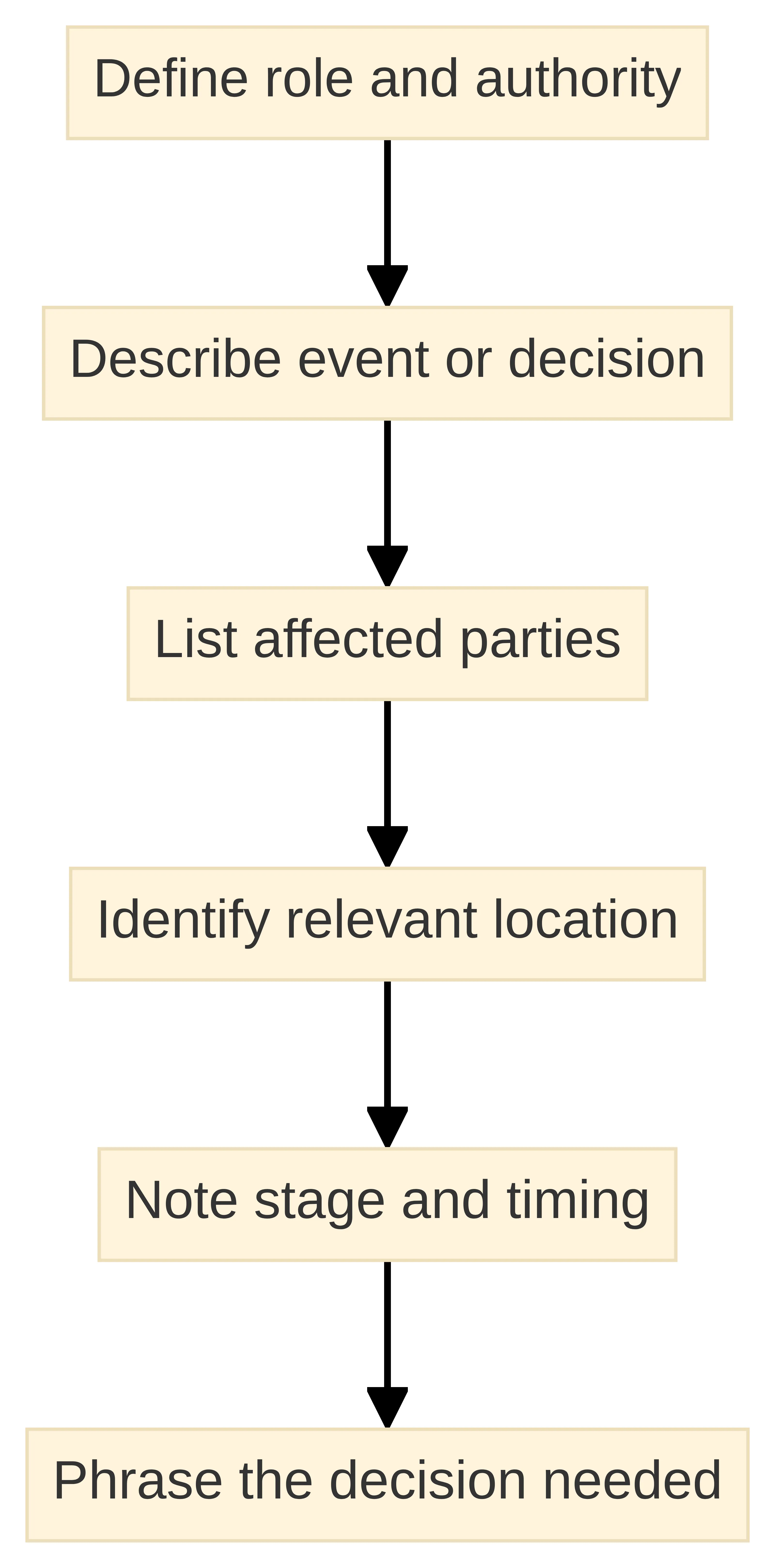
Before opening a directory or sending a message, create a minimum-necessary matter note. Its purpose is to route the inquiry and prepare for a controlled conversation, not to reproduce the organization’s file. Separate known facts from the legal question you want a lawyer to assess.
Include the organization type and your role, along with the person authorized to engage counsel. Describe the event or decision without reaching a legal conclusion: it might involve licensing, employment, patient rights, professional liability, reimbursement, a contract, or a regulatory communication. Identify affected parties by category, such as the organization, a clinician, an employee, a patient, an insurer, an agency, or a business counterparty. Add the facility and other locations connected to the event, agreement, proceeding, or agency relationship, then note the stage and known dates. Finish with the decision you need to discuss, such as what to preserve, how to respond, whether an agreement needs review, or which practice area should receive the inquiry.
Keep names, patient or employee details, and underlying records out of this first note unless a defined intake step requires them. A short description gives you a repeatable way to explain the issue without turning the first contact into an uncontrolled disclosure. If the matter crosses practice areas or jurisdictions, record that uncertainty instead of resolving it in the note.
The disclosure boundary matters because ABA Model Rule 1.18 commentary describes prospective-client status in relation to consulting with a lawyer about forming a client-lawyer relationship concerning a matter. Whether a written, oral, or electronic communication is a consultation depends on the circumstances. The ABA Model Rule 1.18 text also addresses information learned from a prospective client even when no client-lawyer relationship results. Ask what information is needed for the initial inquiry and what should wait until the firm explains the next step.
Use practice-area categories without diagnosing
Practice-area terms are routing labels, not a diagnosis of the matter. Use the minimum description from your matter note to identify one or more plausible categories, while leaving the firm room to say which lawyer or group should receive the inquiry.
Health law or healthcare regulatory work may be a starting point for licensing questions, audits, investigations, disciplinary matters, reimbursement disputes, or organizational structuring. One New York health-law practice describes work for providers and healthcare entities, including physicians, group practices, hospitals, ambulatory surgery centers, and nursing homes. That profile shows how one practice describes its scope; it does not establish that every health-law practice handles every listed issue.
Professional liability or malpractice may be relevant when the question concerns a claimed departure from a professional standard, clinical staff conduct, or the organization’s response to a liability concern. A cited nursing reference describes malpractice lawsuits as involving nurses’ obligations to follow current standards of practice and identifies organizational policies, clinical competency, and the applicable state Nurse Practice Act as relevant obligations. Employment, patient-rights or information-handling, business, contract, and organizational categories may also fit depending on the event.
When two categories remain plausible, retain both in the inquiry rather than choosing a narrow label to make the search look settled. State the organization type, operational issue, jurisdiction, and task you want to discuss. Do not send records merely because a practice-area term appears to match; use the category to frame the question and let the initial contact establish what information is appropriate.
Check jurisdiction and conflicts before sharing details
Check jurisdiction and the initial conflict process before sending substantive details. Consider the facility’s location, the governing agreement, the agency or court involved, the patient or employee relationship, and any other connection that may place the matter in a particular state. A firm can be close to the facility while the issue connects elsewhere.
Ask where the proposed lawyer is admitted, which jurisdiction the firm associates with the relevant practice area, and whether it handles the type of healthcare organization involved. If another state is connected to the matter, ask how that connection would be handled and whether the person receiving the inquiry is the lawyer who would assess it. Also ask what limited information the firm needs for an initial conflict check and whether it wants further facts withheld until that check or another intake step is complete.
The conflict sequence has a specific place in the process. These are general U.S. frameworks, not conclusions about a particular matter or any state’s complete rules.
Record the answers beside the matter note. Convenience can help identify a contact, but it does not establish authority, conflict clearance, or fit. Do not treat a request for more information as a reason to send the complete file; first clarify who will receive it and why.
Use profiles to test fit and contact boundaries
After the jurisdiction and initial disclosure questions are clear, use profiles to test whether a contact is worth approaching. Focus on the specific matter language, the organization or healthcare setting named, the relevant jurisdiction, the person or practice group shown, and the way an initial conversation can be arranged. This is a contact screen, not a quality ranking.
At Lawyers.co, we let clients review lawyer profiles, read client reviews, and schedule consultations with lawyers. Those functions can help you assemble possible contacts. A profile can show what a lawyer chooses to describe, and a review can provide limited context about a past client’s experience. Neither establishes that the lawyer is suitable, available, or willing to represent the organization, and neither predicts an outcome.
For each possible contact, record the profile’s practice-area wording, jurisdiction information, organization or matter types mentioned, contact route, consultation availability, and unanswered questions. Then ask who receives the first inquiry, what information that person wants, whether a conflict check comes first, and whether the proposed lawyer will assess the matter. If the profile does not answer a point that affects your decision, mark the gap rather than filling it with an assumption. To make this comparison usable, assign each unanswered item one of three statuses: confirmed, needs clarification, or hold disclosure. Confirmed means the profile or firm has addressed the point sufficiently for the next step; needs clarification means the gap can be resolved with a focused question; hold disclosure means you should not send substantive material while the recipient, purpose, intake sequence, or transmission method remains unclear. This is not a ranking system. It is a way to keep convenience, apparent practice-area overlap, and review context from silently becoming a hiring decision. Apply the same fields to each contact and keep the answer, source, and date in your record, because profile and contact details may change. If two contacts remain plausible, send each the same bounded description and compare the questions they ask, the boundaries they explain, and the next step they offer. Do not treat a prompt for more facts as an instruction to provide the complete file; use the status of the gap to decide what, if anything, can be shared.
A contact route that invites detailed facts without explaining the next step deserves clarification before you send material. Because the circumstances matter, ask about the boundary instead of assuming that a form, message, or profile interaction creates a client-lawyer relationship.
Screen the first contact for disclosure boundaries
The first message should identify the matter without turning an unstructured contact channel into a full case file. Write a short subject line, name the organization type and jurisdiction, describe the operational issue in general terms, and ask for the firm’s intake instructions before sending sensitive records.
The circumstances of the communication matter. ABA and state-bar commentary explain that whether a written, oral, or electronic exchange is a consultation depends on the circumstances. That distinction does not give you a reliable reason to treat every form, email address, or profile message as private. Before sharing details, ask:
- Is this message being treated as an intake inquiry, a consultation, or general contact?
- What information should you leave out of the initial message?
- Who will receive and review the material?
- What warnings or limitations apply to the communication?
- Should you wait for a conflict check or an identified attorney before sending records?
- What is the firm’s approved method for transmitting sensitive documents?
North Carolina commentary states that when an attorney invites information about potential representation without clear warnings and you respond with information, the attorney must warn that the communication will not create a client-lawyer relationship and that the information will not be confidential or privileged. That is a North Carolina commentary statement about the described situation; do not treat it as a complete rule for every state.
The ABA Model Rule 1.18 text also says that, even when no client-lawyer relationship results, an attorney who learned information from a prospective client must not use or reveal that information except as the rule permits for former-client information. This rule does not remove the need for a careful first contact. Keep your initial description bounded, ask what the channel is designed to receive, and send further information only through a defined intake process.
Use conflict checks as a pre-engagement question
Prepare a limited identification list for the intake team. Depending on the matter, it may include the organization, relevant affiliated entities, a counterparty, an agency, an insurer, a former provider, an employee, or another party whose identity is necessary for the firm to run its check. Do not add sensitive clinical or employment details merely to make the list longer. Ask the firm what names or entities it needs and what information should wait.
Use questions such as:
- What information is needed for the initial conflict check?
- Will the firm tell you whether it can continue after reviewing those names?
- Should you avoid sending documents until the check is complete?
- If the firm cannot proceed, will it explain whether the issue is a conflict, practice-area boundary, jurisdiction issue, or availability problem?
- What happens to the information you already submitted if the firm does not take the matter?
A conflict check does not establish that the firm understands the matter, has capacity to handle it, or is a good fit. It answers a narrower screening question. The ABA Model Rule 1.18 text states that information learned from a prospective client remains subject to the rule’s restriction on use or disclosure even when no client-lawyer relationship results, subject to the stated exception. Keep the conflict process and the substantive consultation distinct, and do not assume that completing one completes the other.
Prepare a bounded consultation packet
A bounded consultation packet gives the firm enough structure to assess the initial request without requiring you to send every record at the outset. The packet should be short, labeled, and organized around questions rather than conclusions.
Include:
- Matter summary: State the organization type, your role, the operational event, the relevant jurisdiction, and the decision or response you need to plan.
- Timeline: List material dates, communications, deadlines, meetings, agency contacts, or filed events that you know. Mark uncertain dates as uncertain.
- Party and entity list: Provide the names needed for intake and conflict screening through the channel the firm identifies. Separate this list from unnecessary background detail.
- Document index: Describe available policies, contracts, notices, correspondence, reports, or records by category. Send copies only when the firm gives you an appropriate method and requests them.
- Question list: Write the questions you want the initial conversation to address, such as the relevant practice area, jurisdiction, immediate preservation steps, response process, and engagement terms.
- Decision authority: Identify who can approve further contact, authorize a retention decision, or release additional organizational information.
Keep patient, employee, clinician, and business-counterparty information to the minimum needed for the stage of contact. Remove unnecessary identifiers from the working summary. If a document’s identity or contents is itself necessary to explain the issue, describe that need and ask how the firm wants it transmitted rather than attaching the complete record automatically.
The same packet structure can organize an inquiry from a facility in Austin, Abilene, Brownsville, Beaumont, or the Texas Hill Country, but the jurisdiction field should identify the state and other relevant connection for the matter. A location label alone does not answer where an attorney may provide services. ABA commentary addresses temporary services and continuous presence across jurisdictions, so keep that question visible in the packet when the matter crosses state lines.
The packet is a communication aid, not a legal conclusion. The ABA commentary describes consultation status as dependent on the circumstances of the exchange, and Model Rule 1.18 addresses information learned from a prospective client. Use the packet to control sequence: identify the issue, ask about intake and conflicts, understand the disclosure boundary, and then provide additional material through the channel the firm explains.
Prepare a bounded consultation packet
The practical artifact for the first contact is a bounded consultation packet, not the complete matter file. Prepare a short summary of the operational issue, the organization and your authority, the relevant jurisdiction, a timeline with known dates, a limited party list for conflict screening, a document index, and the questions you want answered. Keep underlying patient, employee, or organizational records separate until the firm explains who should receive them and for what purpose.
Before sending the packet, confirm which information is needed for the conflict check and whether the firm has cleared that step. Ask who will assess the matter, whether the exchange is a consultation, what disclosure warnings or limits apply, how information will be handled if no client-lawyer relationship results, and what communication channel should be used. Also ask about jurisdiction, consultation availability, fees, scope, and the point at which an engagement would be documented. These questions request terms; they do not assume that representation will follow.
Choose the next contactable option based on a clear path for this bounded inquiry, not on an unsupported claim about a firm. A careful packet makes the first conversation specific and easier to evaluate while leaving the representation decision to you and the lawyer.
What should you ask before sharing healthcare matter details?
What steps should I take to define my legal problem before searching for a lawyer?
Start by writing a short internal description that separates known facts from the legal question you need to discuss. Include your role and authority, the event or decision, affected parties, relevant location, timing, and the specific decision you need to make.
How can I verify the jurisdiction of a legal firm before contacting them?
Check the location of the firm against the relevant jurisdiction connected to your matter. Ask questions about the jurisdictions in which the attorney is admitted and how they handle matters involving other states.
What criteria should I use to compare lawyer profiles?
Look for specific matter language, organization fit, jurisdiction information, role clarity, communication fit, consultation availability, and the context of client reviews.
What should I include in my initial contact with a law firm?
Your initial message should identify the matter in general terms, ask for the firm's intake instructions, and clarify what information should be withheld until a consultation is established.
How do I conduct a conflict check before engaging a lawyer?
Prepare a limited identification list of relevant parties and ask the firm what information is needed for the initial conflict check. Ensure you understand how the firm handles conflicts before providing detailed information.
What is the purpose of a bounded consultation packet when contacting a lawyer?
A bounded consultation packet organizes your request, providing the firm with enough structure to assess your needs without overwhelming them with unnecessary details. Include a matter summary, timeline, party list, document index, and specific questions.
What should I do if I have multiple practice areas that might fit my legal issue?
Keep two or three possibilities in mind rather than selecting a narrow label too early. This allows you to ask prospective firms which lawyer or practice group should receive your initial inquiry.
Sources
- RPC 1.18: Duties to Prospective Clients - Washington State Bar News — wabarnews.org
- Rule 1.18 Duties To Prospective Client - Comment — www.americanbar.org
- Comment on Rule 5.5: Unauthorized Practice of Law; Multijurisdictional Practice of Law — www.americanbar.org
- 1.18 Duties To Prospective Client | North Carolina State Bar — www.ncbar.gov
- LEGAL IMPLICATIONS — www.ncbi.nlm.nih.gov
- Rule 1.18: Duties to Prospective Client — www.americanbar.org
- Lawyers Directory - Find Lawyers - Lawyers.co